Washington, D.C. July 15, 2010. The Wall Street Reform and Consumer Protection Act (H.R. 4173)passed 60-39 by Congress today includes a number of provisions designed to protect employees who report fraud in the commodity and stock exchanges. The NWC website has information on the specific whistleblower sections.
The bill includes a qui tam provision that provides monetary rewards for whistleblowers who disclose original information that the government did not know about concerning major fraud in the commodity and stock exchanges. There are also strengthened anti-retaliation provisions for employees who disclose major fraud to the SEC and commodities board, and who provide information to the newly created Bureau of Consumer Financial Protection.
The bill closes a major loophole in the Sarbanes-Oxley Act, a corporate whistleblower law, by covering subsidiaries of publicly traded companies. For the first time employees at “nationally recognized” “statistical rating organizations” such as Moody’s and Standard & Poor’s, have whistleblower protection.
In addition, H.R. 4173 prohibits mandatory arbitration on Wall Street related whistleblower claims, permits jury trials under SOX, requires the SEC to establish a whistleblower protection office, sets a three-year statute of limitations for retaliation cases under the False Claims Act, and prohibits retaliation under the federal obstruction of justice act.
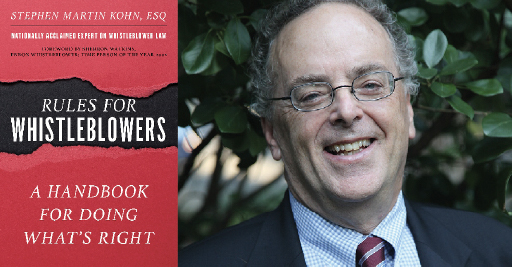
Stephen M. Kohn, Executive Director of the National Whistleblowers Center, said, “This is an historic recognition by Congress that whistleblowers play a critical role in combating fraud. It is one of the most important advances in whistleblower legislation to date. Congress recognizes that just protecting whistleblowers from being fired is not enough. The anti-retaliation laws of the past have not adequately protected the public interest because employees remain afraid to make disclosures. For a whistleblower system to work there must be incentives.”
Lindsey M. Williams, Director of Advocacy and Development at the National Whistleblowers Center, said, “Although the Wall Street Reform bill gives a shiny new umbrella to private employees, it leaves federal employees out in the rain with no cover. There is more work to be done. Congress must immediately pass H.R. 1507 in order to give federal employees the same rights repeatedly granted to private employees.”
Links: