Ruling Protecting Testimony Before Federal Grand Juries Will
Have Widespread Impact On Fraud Investigations
Washington, D.C. June 19, 2014. Today, the U.S. Supreme Court issued a landmark whistleblower decision in the case of Lane v. Franks. The Court held that truthful testimony before a federal Grand Jury is “clearly” protected speech under the First Amendment.
The Supreme Court in an unanimous decision recognized the “importance” of protecting speech when “public corruption” is at issue, acknowledging that corruption cases “often require testimony” from government employees willing to blow the whistle on their managers. Demonstrating an awareness of the dilemma facing employees who witness fraud, the Court held that the failure to protect whistleblowers from retaliation “would place public employees who witness corruption in an impossible position, torn between the obligation to testify truthfully and the desire to avoid retaliation and keep their jobs.”
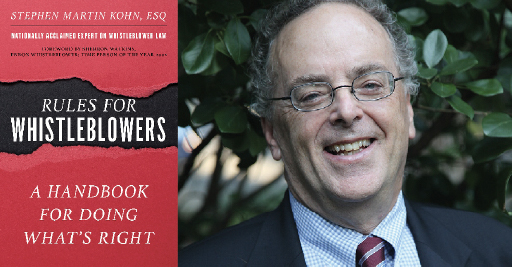
In a statement issued today, Stephen Kohn, Executive Director of the National Whistleblower Center, said: “Given the widespread use of Grand Jury proceedings to investigate securities, banking and tax fraud, today’s ruling will have widespread impact. It will have a direct and major impact on the willingness of public employees to expose corruption in government.”
“The right of every American citizen to truthfully testify about criminal activities, including fraud in government contracting, is a cornerstone to a democracy. Criminals – even if they are high-ranking elected officials or billionaire bankers, cannot retaliate against any person who truthfully testifies about their crimes,” Kohn said.
“Retaliating against whistleblowers who provide truthful information about potential federal crimes to federal law enforcement is already an obstruction of justice. The Supreme Court has clarified that it is also unconstitutional. This ruling gives a green light to all public employees who have information concerning official corruption and fraud, and want to expose these crimes,” Kohn added.
In its amicus brief before the Supreme Court, the National Whistleblower Center cited to Supreme Court cases from 1884 and 1895, and pointed out that the Court had historically protected a citizen’s “duty and right” to testify in criminal proceedings.
Links: