December 12, 2016. In the wee hours of Saturday morning’s lame duck session, the U.S. Senate passed a truncated version of the FBI Whistleblower Protection Enhancement Act (WPEA). This bill was drawn from an excerpted portion of a bill of the same name, originally introduced by Senators Chuck Grassley (R-IA) and Patrick Leahy (D-VT) in 2015. Whereas the original bill was a full reform of the broken FBI whistleblower protection system, there were last minute objections from the intelligence community that prevented enactment of the full FBI WPEA.
Current regulations state that FBI whistleblowers are protected if they report wrongdoing to nine “designated officials.” As a result of the Justice Department’s narrow interpretation of what is a whistleblower disclosure, 47% of all FBI whistleblower cases filed in one year were dismissed because the employee reported problems directly to their supervisor instead of reporting to one of the nine “designated officials,” according to a GAO Report on this issue.
Not only is this impractical, but it contradicts FBI chain of command and protocol, as well as the original intent of Congress when it passed the FBI whistleblower provisions in 1978. Pending President Obama’s signature on the new bill, that problem will be fixed.
The recently passed FBI Whistleblower Protection Enhancement Act of 2016 clarifies that FBI whistleblowers are protected if they report wrongdoing to their supervisors or through their managerial chain of command.
The truncated FBI WPEA bill was swiftly introduced on Wednesday, December 7th, when Rep. Jason Chafetz (R-UT) took to the floor of the House and stated that reform was needed to restore the intent of Congress to broadly protect FBI whistleblowers. It later passed the House by unanimous vote, 404-0, before being unanimously passed by the Senate before it adjourned on Saturday morning.
Senator Grassley(R-IA), one of the sponsors and authors of the original bill, issued the following statement on the truncated bill’s passage. “This is a really important provision for the patriotic men and women at the FBI who have gone without the whistleblower protections given to other federal employees for far too long. The current process is vague, confusing and lacks common sense, and it often puts people in hot water for no legitimate reason,” Grassley said. “The protections in this bill ensure a logical reporting requirement which allows more cases to be heard on the merits instead of being senselessly dismissed because an FBI employee logically reported wrongdoing to their supervisor.”
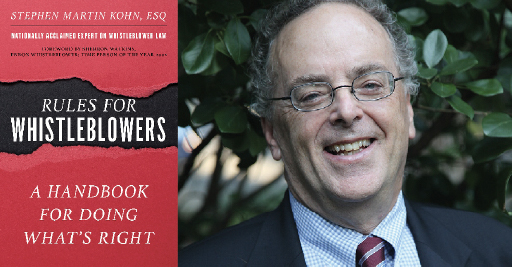
The NWC has supported FBI whistleblower reforms for 20 years. NWC’s Executive Director Stephen Kohn also testified before the Senate Judiciary Committee, which held hearings on the original FBI WPEA in 2015. There has been strong bipartisan support in both the House and Senate to enact the FBI WPEA.
“While it is disappointing that the entire FBI WPEA could not pass this year, we are thankful that Congress was able to unanimously pass this truncated version that clarifies what is ‘protected’ whistleblowing at the FBI,” Kohn said. “This is an important step to protect whistleblowers and increase accountability at the FBI—one of the largest law enforcement agencies in the world,” Kohn added.
“We will continue to work for passage of the rest of the FBI whistleblower reforms that are needed to eliminate needless delay and bring whistleblower rights at the FBI into line with those afforded to other federal employees,” noted Kohn.
Related links:
- FBI Whistleblower Protection Enhancement Act (As passed by the House and Senate)
- FBI Whistleblower Protection Enhancement Act (Original)
- Senate Hearing Examines Broken FBI Whistleblower Program
- Senate Judiciary Committee Unanimously Approves FBI Whistleblower Reform
- Senator Chuck Grassley Press Release and Statement
- Congressman Jason Chaffetz Floor Statement (video)