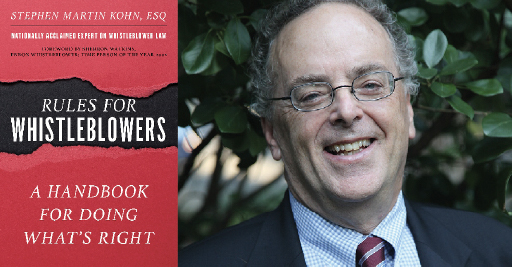
Washington, D.C. November 27, 2012. President Barack Obama signed into law today the Whistleblower Protection Enhancement Act (WPEA). Whistleblower attorneys working pro bono with the NWC played an instrumental role in passing this Act. NWC’s Executive Director Stephen Kohn testified before the Senate Homeland Security Committee and David Colapinto testified before the House Government Oversight hearing in support of the bill.
The bill contains important advances including an expanded definition of “protected disclosure” and permits whistleblowers to collect compensatory damages. Kohn and Colapinto worked for over two years to successfully block three “poison pills” that had been inserted into the law. These “poison pills” would have permitted the MSPB to summarily dismiss cases without a hearing, repealed existing protections for FBI whistleblowers and permitted the executive branch to fire whistleblowers for reporting “minor” violations of law.
“The bill contains important reforms, but federal employee still lack most of the basic rights available to whistleblowers in the private sector. We hope that President Obama and Congress will continue their efforts to ensure federal employees are fully protected during the next Congress.” Kohn said. “This is a small but meaningful step. ”
Pursuant to this Act, its new provisions will become effective in thirty days. Click this link to view a copy of the WPEA.