October 31, 2016. On Tuesday November 1, 2016, the U.S. Supreme Court will hear oral arguments in State Farm Fire and Casualty Company v. U.S. ex rel. Rigsby. Having suffered a 758-thousand-dollar jury verdict for defrauding the Government following Hurricane Katrina, State Farm is now attempting judicial gymnastics to avoid paying the judgment.
The National Whistleblower Center filed an amicus brief in support of the relators, the Rigsby sisters, who uncovered the massive fraud that State Farm committed against U.S. taxpayers.
The question this case presents is whether the harshest sanction available to a court to police its order sealing a case (i.e. dismissal) should be automatically applied, regardless of the intent of the party committing the infraction, harm caused to other parties, interest of the Government or nature of the violation itself. In its amicus brief, the National Whistleblower Center argued against such an inflexible rule that is unquestionably contrary to Congress’s intent.
State Farm is asking the Supreme Court to read into the False Claims Act (FCA) a severe sanction for those who violate the seal provision (31 U.S.C.S. § 3730(b)(2)). The 5th Circuit decision ruled against mandatory dismissal, and in favor of a flexible balancing test that prioritizes the interests of the government,
holding that a violation of the seal requirement did not warrant dismissal of this case since the government was not harmed by the disclosure and the whistleblowers did not act in bad faith. See United States ex rel. Rigsby v. State Farm Fire & Cas. Co., 794 F.3d 457, 465 (5th Cir. 2015).
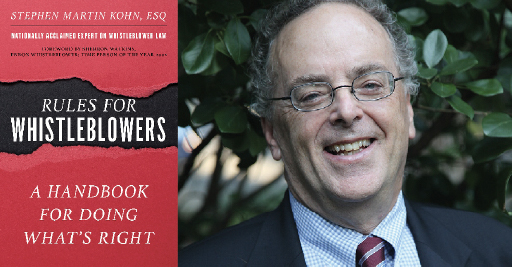
The FCA is America’s most important—and successful—anti-fraud law, and its seal provision was designed for the exclusive benefit of the Government. Mandatory dismissal would undermine the FCA and hurt taxpayers—the intended beneficiaries of the False Claims Act. NWC’s Executive Director Stephen M. Kohn noted, “This is another attempt by the Chamber of Commerce to undermine the False Claims Act and protect corrupt government contractors who rip off the taxpayers from being held accountable. It is time to stop shooting the messenger.” Kohn added, “This is a critical moment for the future of the False Claims Act. It has become the most successful antifraud law in the world, and the U.S. has a sincere interest in fostering its continued success.”