This article highlighting the background and traits of a qualified whistleblower lawyer is sent as part of NWC’s “Sunday Read” series. For more information like this, please join our mailing list.
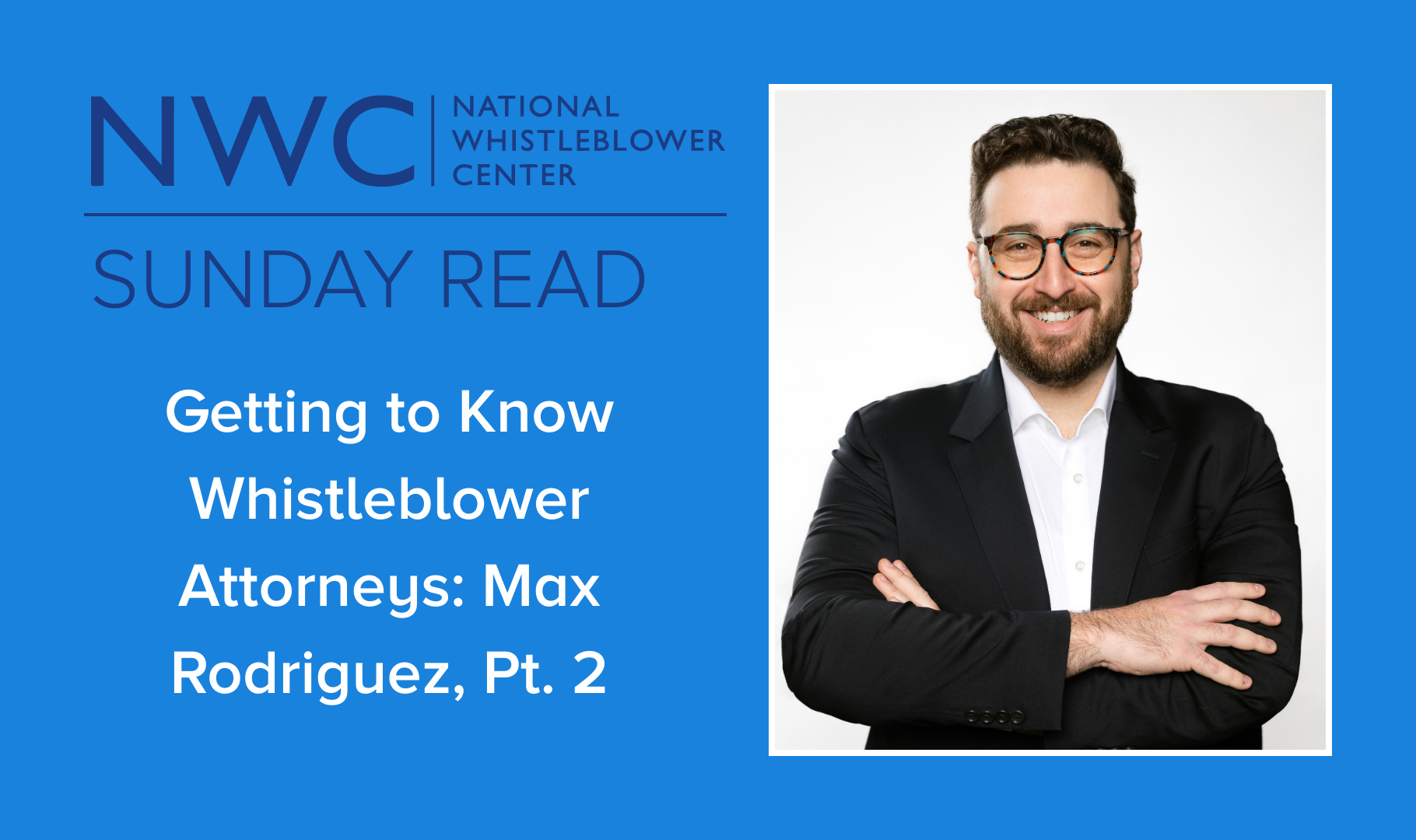
In the most recent “Getting to Know Whistleblower Attorneys” feature, National Whistleblower Center (NWC) recently spotlighted a rising star among whistleblower lawyers, Max Rodriguez.
Rodriguez is a member of the education committee of The Anti-Fraud Coalition (TAF) and the Qui Tam Section of the Federal Bar Association. He also reaches the public as a frequent contributor on major networks like MSNBC and as a guest on podcasts, delving into a range of legal issues. His perspective has also been published by prestigious legal outlets including The Hill and Law360.
In this Sunday Read, we learn more about Rodriguez’s legal and business philosophies, his take on the trends in the whistleblower landscape, and where the future of the practice may be headed.
Continuing the Dialogue with Max Rodriguez
You handled whistleblower complaints tied to COVID and the Paycheck Protection Program (PPP)? How disheartening was it to see that fraud knew no bounds?
The scale of COVID-related fraud is truly staggering, as I wrote about for the TAF Coalition. At a time when the nation and the world was in crisis, and many businesses and organizations genuinely desperately needed money to attempt to stay afloat while paying their employees, fraudsters were grabbing everything they could with no intention to support anyone except themselves. They rushed into the program, pushing out genuine applicants who did not have inside connections at banks, they kept money for themselves instead of giving it to their employees, or they never had employees at all.
Everyone — taxpayers, workers, and honest hard-working small business owners — paid the price. We are still working to unwind all the wrongdoing that occurred during that time, including through whistleblower cases.
You litigate environmental claims. With rollbacks on the levels of forever chemicals (PFAS) being allowed in the water and recent historic PFAS litigation, do you expect more environmental and water-based whistleblower claims?
Corporate wrongdoing involving environmental and health and safety issues will always be a huge problem, with potentially terrible health consequences. The same concerns exist with respect to climate change. I wrote about that concern in The Hill when the Inflation Reduction Act was passed.
Unfortunately, in the current environment, it is hard to find a receptive audience for these concerns in traditional whistleblower pathways. If and when that changes, I think whistleblowers will be critical to revealing to relevant enforcement actors what has gone wrong in the last several years, as environmental regulations have been pushed aside and diminished.
As NWC recently noted, the SEC Whistleblower Program experienced a steep decline in awards in the prior fiscal year. What is your reaction when you see such a sharp drop? For example, is it an anomaly or do you have to re-strategize certain cases?
I think it is an indication that the SEC under new leadership is reorienting itself, and thinking about new ways to prioritize its resources and how it sees its own role in the markets. I don’t think the levels will stay this low forever, although I think it represents a huge sea change in the types of cases and subject matter that the SEC is interested in. These are factors I consider when speaking with potential clients, and considering whether to take them on.
Looking ahead, what developments in whistleblower law or culture—whether in how agencies respond, how courts treat retaliation, or how the public views these cases—give you the most hope? And where do you think advocates like you can move the needle the furthest?
One area I am very dedicated to is mental health. This is an especially critical concern for some whistleblowers, who often end up experiencing a kind of complex trauma through repeated moral injury. These downstream mental health concerns stem not just from their experiences in a bad organization, but from having to relive those experiences. They require careful attention, management, and support (both personal and professional).
I would love to see (and will continue to speak out about) the government, courts, the public, and other whistleblower lawyers like me learning more about these mental health concerns, and making more resources available to improve access to appropriate mental health care for whistleblowers without fear, judgment, or lack of access.
***
NWC thanks Max Rodriguez for his honest insight and perspective. Learn more about him in the prior edition of Sunday Read. Make sure to join NWC’s mailing list, subscribe to the newsletter on LinkedIn, and follow us on Medium to receive all notifications!
Get to know other whistleblower attorneys, such as:
- Dean A. Zerbe
- Mychal Wilson, Esq.
- Jacey Messer, Esq.
- John McKnight
- Will Kramer
- María de los Ángeles Estrada
- Vivek Kothari
The “Getting To Know Whistleblower Attorneys” series will continue.
Need Legal Assistance?
The National Whistleblower Center can connect you with the right whistleblower attorney through it’s attorney referral program. Simply fill out the secure intake form for assistance.