As artificial intelligence (AI) becomes more powerful and widespread, an important question remains: Who can safely speak up when the people building or deploying these systems see something that could put the public at risk?
The National Whistleblower Center (NWC) believes the answer should be clear. Workers who identify serious problems with AI should be able to report those concerns without risking their careers, financial security or legal rights.
That is the goal of the AI Whistleblower Protection Act (AIWPA). The bipartisan AIWPA bill would establish federal whistleblower protections for people who report AI-related security vulnerabilities, violations of federal law, or substantial and specific dangers to public health, public safety or national security.
The AIWPA offers an opportunity for Congress to address a critical missing piece of the emerging AI governance framework: protecting the insiders who may be the first people to recognize when something has gone wrong.
The AI Whistleblower Protection Act: The Basics
On May 15, 2025, Sen. Chuck Grassley (R-IA) introduced the AIWPA, S. 1792, and Rep. Jay Obernolte (R-CA) introduced the House companion, H.R. 3460. Both bills remain pending in Congress.
The legislation addresses a gap in existing whistleblower law. Many federal whistleblower protections are tied to specific types of misconduct or particular industries. As a result, an employee who identifies a potentially dangerous AI system does not have the same clear statutory protections available to workers in industries such as nuclear energy or aviation.
That distinction matters because some of the most serious AI risks may emerge before lawmakers or regulators have established specific legal prohibitions. “Transparency brings accountability,” Grassley said upon introducing AIWPA, which is designed to give AI workers a protected avenue to report serious concerns before a preventable problem becomes a catastrophe. “Today, too many people working in AI feel they’re unable to speak up when they see something wrong. Whistleblowers are one of the best ways to ensure Congress keeps pace as the AI industry rapidly develops.”
What Would the AIWPA Protect?
AIWPA would prohibit employers from retaliating against covered individuals who make protected disclosures involving:
- AI security vulnerabilities, or
- AI violations.
The bill defines an AI security vulnerability generally as a security failure or lapse that could allow emerging AI technology to be stolen or otherwise acquired, including by a foreign entity. An AI violation includes a violation of federal law related to the development, deployment or use of AI, as well as a failure to appropriately respond to a substantial and specific danger that AI may pose to public safety, public health or national security.
That second category is particularly significant, because traditional whistleblower protections often focus on reporting conduct that is already illegal. The AIWPA recognizes that emerging technology can create serious risks before lawmakers have had an opportunity to establish specific legal prohibitions.
The result would be a federal, AI-specific protection for workers who reasonably believe they have identified a significant risk and want to report it.
Who Could Report Concerns?
The AIWPA would protect current and former employees as well as independent contractors who make qualifying disclosures.
Covered individuals could report information to federal regulatory officials, the Attorney General, regulatory or law enforcement agencies, members of Congress or congressional committees. The bill also protects certain internal disclosures to supervisors or others within an organization who have authority to investigate or address the reported misconduct.
The legislation also protects individuals who participate in investigations or related judicial or administrative proceedings based on their disclosures.
That range of reporting channels is important in an industry where employees may encounter risks at different stages of AI development, testing and deployment.
Protection Against Retaliation
For whistleblower protections to work, employees must have confidence that speaking up will not cost them their jobs.
The AIWPA would prohibit employers from discharging, demoting, suspending, threatening, blacklisting, harassing or otherwise discriminating against a covered individual because of protected whistleblowing activity.
The bill also addresses another potential obstacle: restrictive employment agreements. It would prevent AI whistleblower rights from being waived through employment agreements and limit the use of mandatory arbitration to prevent whistleblower claims from being heard in court. NWC has emphasized that restrictive nondisclosure and severance agreements can discourage current and former AI employees from reporting concerns to the government, including Congress.
Why AI Whistleblowers Matter
The issues of AI security risks and violations – as well as retaliation – is not hypothetical. In 2024, 13 AI whistleblowers issued the “Right to Warn” letter, a letter warning about serious safety risks associated with advanced AI and highlighting the need for insiders to have safe avenues for reporting concerns.
One of those whistleblowers was Daniel Kokotajlo, a former governance researcher at OpenAI, who was listed on the Time100 Most Influential People in AI in 2024 for co-authoring the “Right to Warn” letter. Kokotajlo was a featured speaker during National Whistleblower Day 2025, when he warned of the ways AI development can spiral out of control.
“Super intelligence is an AI system that is better than the best humans at everything, while also being faster and cheaper,” Kokotajlo said at the NWC event in 2025.
Kokotajlo is now the executive director of the AI Futures Project, a nonprofit research group that forecasts the future of AI. This group warns the top risks related to super intelligence are “Concentration of Power” and “Loss of Control.”
“Once we have these extremely powerful AI systems and they’re starting to be deployed through the economy and automating all these jobs — which are being integrated into the military, and the government,” he said, “…whoever controls these AI systems will plausibly just be in control of the world, or at least the U.S. or whoever is [leading] the integration.”
A flaw in a system used by thousands or millions of people could have consequences far beyond the workplace where the problem was first identified. That makes early warnings especially important.
People working directly with AI systems may see potential problems before regulators, policymakers or the public. Whistleblower protections can give those insiders confidence that legitimate concerns can be raised without automatically jeopardizing their livelihoods.
“The AIWPA’s principle is straightforward,” said NWC Program Manager Jeana Lee. “The people closest to an emerging technology should not have to choose between protecting the public and protecting their careers.”
The Next Step for Congress
The AIWPA’s passage will require action in Congress at an important moment for AI policy.
Congress is being asked to make decisions about how AI should be developed, deployed and governed. Those decisions should include not only rules for the technology itself, but protections for the people who are in the best position to warn when those rules, safeguards or systems are failing.
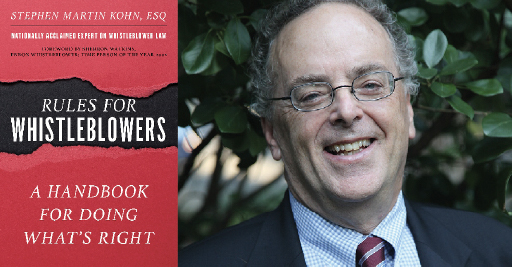
The AIWPA would provide that protection. As NWC Chairman of the Board Stephen M. Kohn told Whistleblower Network News in 2025, “The risks posed by the improper use of artificial intelligence demand that Congress immediately act and pass this urgently needed law.”
For NWC, passing the AI Whistleblower Protection Act is an important step toward making sure the people who see AI’s risks firsthand have a protected voice.