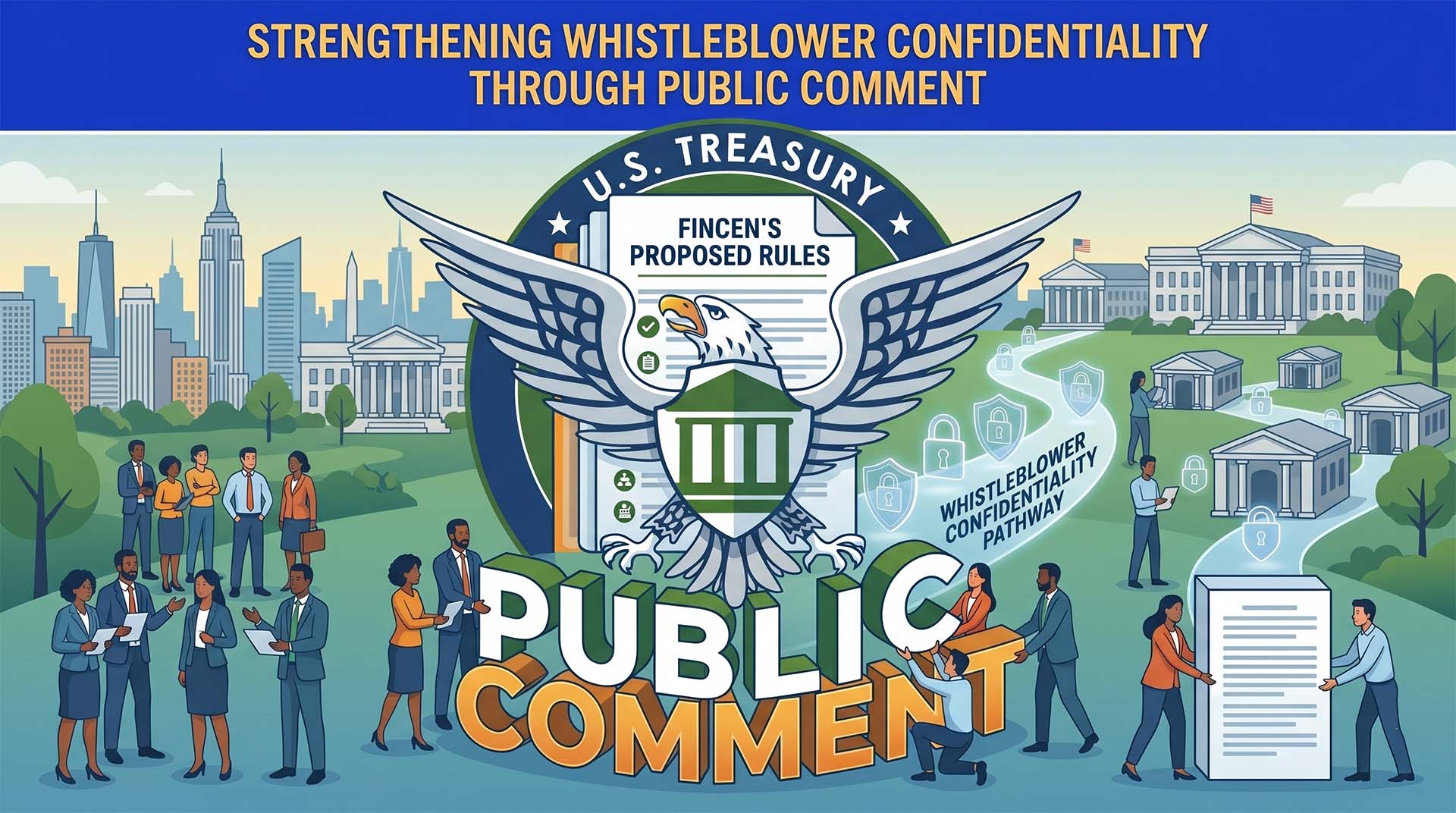
You may have noticed that the National Whistleblower Center’s (NWC) website is undergoing a redesign (with more updates on the way). One of the first items intended to catch your attention on whistleblowers.org is an urgent call to action about the Financial Crimes Enforcement Network (FinCEN)’s proposed whistleblower rules.
Awareness of these rules is prominently positioned on the page because what should be a breakthrough for FinCEN’s anti-corruption enforcement policies are – in NWC’s view – insufficient to protect whistleblowers. But the public has the chance to advocate for justice and more effective governance. In this Sunday Read, we will discuss the proposed regulations and why urgent action is needed to maintain strong confidentiality protections for whistleblowers.
Recent Developments
On March 30, 2026, FinCEN published a proposed rule in the Federal Register to implement a whistleblower program incentivizing tips on fraud-related violations of the Bank Secrecy Act, U.S. sanctions, and the Anti-Money Laundering Act (AML). The regulations arrived more than five years after federal legislation established the program.
Following an advocacy campaign led by NWC, Congress created the Anti-Money Laundering Whistleblower Improvement Act (AML WIA) to help law enforcement follow the money in some of the world’s most dangerous and complex financial crime cases. The AML whistleblower program covers a much broader range of financial crimes than previous whistleblower laws, and allows whistleblowers to qualify for awards based on disclosures to a wider variety of sources. But NWC noted that FinCEN’s proposed rules borrow too heavily from the SEC’s Dodd-Frank framework without fully accounting for the AML WIA’s differences – in particular, the greater variety of disclosures it permits and its focus on international whistleblowers.
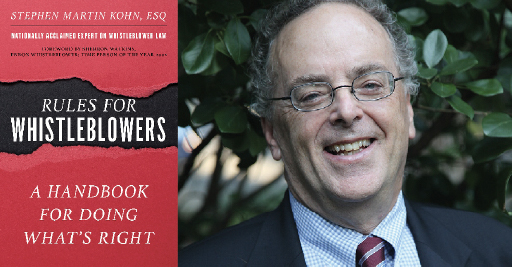
“FinCEN’s long-awaited whistleblower rulemaking should be a breakthrough for anti-corruption enforcement,” said NWC Chairman Stephen Kohn. “Instead, the proposed regulations could endanger the people Congress intended to protect and incentivize – insiders with credible information about money laundering, sanctions evasion, terrorist financing, and other forms of illicit finance.”
The Top Priority: Stronger Identity Protection
One of NWC’s central concerns is FinCEN’s confidentiality framework. The AML WIA includes a requirement that if FinCEN wants to share a whistleblower’s information with another government agency, it must ensure the agency will fully maintain the whistleblower’s confidentiality. By failing to implement this statutory requirement in its regulations, FinCEN leaves whistleblowers exposed – particularly international whistleblowers reporting in authoritarian countries, who could see their information shared with hostile government officials.
As NWC noted: “[The proposed] rules fail to implement the mandatory confidentiality requirements essential for the law to work, create technical procedural barriers that disqualifying good-faith whistleblowers, fail to protect international whistleblowers who face severe dangers, and add disqualifications that Congress never authorized.”
NWC believes that the final rule should adopt stronger confidentiality safeguards, including those of the more protective IRS whistleblower program, and should ensure that confidentiality applies consistently whether the report reaches FinCEN or the Department of Justice (DOJ).
Further Revisions Needed on a Broader Scale
NWC is also challenging the proposal’s additional exclusions. The comments argue that FinCEN cannot add blanket disqualifications that Congress did not authorize, especially where those exclusions would bar otherwise meritorious whistleblowers who happen to be foreign officials, compliance personnel, or people who first raised concerns internally. In NWC’s view, the statute intentionally protected a broad class of reporters, and the agency may not narrow that protection by regulation.
In particular, NWC noted, FinCEN’s proposal establishes strict, non-statutory filing requirements that will disqualify countless whistleblowers who Congress intended to be eligible for awards.
NWC’s position is that the proposed regulations should be revised to maximize confidentiality, avoid unauthorized exclusions, and align with international best practices so the program can work as Congress intended.
This is not just a legal fight over fine print. It is a contest over whether the U.S. will build a whistleblower program that can actually pierce secrecy, expose transnational crime, and protect the people who make that possible.
“This is a pivotal turning point,” Kohn said. “If FinCEN gets these rules right, the AML WIA could dwarf every whistleblower program that came before it.”
What You Can Do To Strengthen the Proposed FinCEN Rules
NWC has created a guide instructing the public on how to submit a comment to FinCEN critiquing the proposed rules. The public comment period will close on June 1.
As noted in the guide, a public comment is not a petition – it carries legal force, as FinCEN is legally required to take every comment it receives into consideration when implementing its final rules. Filing your comment with FinCEN is a generational opportunity to weigh in on the most important whistleblower rulemaking in the past 15 years.
The broader public policy argument is straightforward: if the goal of the AML WIA is to unearth sophisticated financial crime, then the rules must reward people who take the risk of speaking up, not create technical barriers that disqualify them after the fact.
This is a historic opportunity to shape policies that expose corruption and reduce waste, fraud and abuse in the U.S. and globally. The next Sunday Read will explore the global implications of FinCEN’s proposed rules if they are passed as drafted.