The public debate over the governance of artificial intelligence has reached an inflection point in 2026. Policymakers have considered questions about privacy, cybersecurity, discrimination, consumer protection and national security. While these questions are important, effective oversight also requires access to reliable information about what is happening inside the companies deploying powerful AI systems.
As the National Whistleblower Center (NWC) frequently notes, that information often comes from insiders.
Engineers, researchers, safety specialists, product managers and contractors can see problems well before they become visible to regulators. They may identify a security vulnerability that could permit the theft of advanced technology, a failure to comply with federal law or a serious risk to public safety. Yet without clear and enforceable legal protections, these workers may face an impossible choice: remain silent or risk retaliation.
As Congress considers how to govern rapidly advancing artificial intelligence, it must consider the people best positioned to identify its dangers: the workers developing, testing and deploying AI systems. Recent action on the bipartisan AI Whistleblower Protection Act (AIWPA) shows that this pragmatic safeguard is gaining urgency and public support.
A Pivotal Moment in Congress
Senate Judiciary Committee Chairman Chuck Grassley (R-IA), a longtime champion of whistleblower rights and NWC ally, introduced the AIWPA in May 2025. The bipartisan bill would establish federal anti-retaliation protections for AI workers who report security vulnerabilities and violations connected to the development, deployment or use of artificial intelligence. Original Senate cosponsors included Sens. Marsha Blackburn (R-TN), Josh Hawley (R-MO), Chris Coons (D-DE), Amy Klobuchar (D-MN) and Brian Schatz (D-HI). More recently, Senate Minority Leader Chuck Schumer (D-NY), Sen. Kirsten Gillibrand (D-NY) and Sen. Richard Blumenthal (D-CT) joined in cosponsoring the legislation.
Now, the bill faces an important test.
According to a September 23 report by POLITICO, Sen. Grassley has been working to advance the AIWPA by unanimous consent – a Senate procedure that can move legislation quickly when no senator objects. The report said Grassley was bringing the bill to the Senate floor to require any objecting senators to publicly register that opposition.
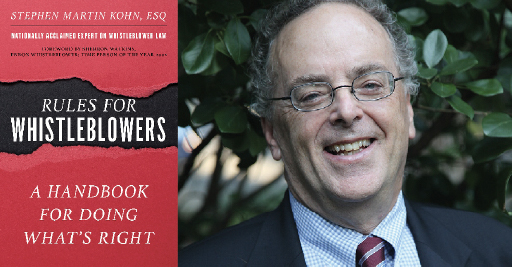
“Senator Grassley has been a leader on whistleblower issues for decades,” NWC Chairman of the Board Stephen M. Kohn told Whistleblower Network News. “And he is continuing to champion these issues by leading the momentum on a current, critical whistleblower issue: ensuring AI employees can safely warn the public of threats that would be invisible otherwise.”
NWC has noted that the AIWPA is not a sweeping attempt to regulate every aspect of artificial intelligence. It is a targeted, practical proposal that recognizes a basic reality: AI governance cannot work if employees with firsthand knowledge of significant dangers are silenced.
The act of hotlining the bill signals that its advocates are serious about the AIWPA’s prompt consideration. It also puts a simple question before Congress: Should workers who report credible AI-related threats receive the same kind of legal protection that Congress has provided in other high-risk industries?
The answer should be yes.
How the AIWPA Would Protect Whistleblowers and Ultimately the Public
The AIWPA would protect current and former employees, as well as independent contractors, who make covered disclosures about an “AI security vulnerability” or an “AI violation.”
The legislation is especially important because it recognizes that serious technological risks do not always fit neatly into existing legal categories. In an industry evolving as quickly as AI, a worker may identify a dangerous practice before Congress or an agency has enacted a rule specifically prohibiting it. If the law protects disclosures only after a disaster occurs, it does too little to prevent harm.
As recently reported, AIWPA provides an avenue for workers to raise concerns when they reasonably believe they have identified a covered security vulnerability or violation. Those disclosures could be made to federal regulatory or law-enforcement agencies, the Attorney General, Congress and congressional committees. The bill also protects appropriate internal disclosures to supervisors or other individuals with authority to investigate or address the reported misconduct.
Just as importantly, the bill would prohibit employers from retaliating against covered individuals. It would also prevent employers from using contractual waivers, restrictive nondisclosure agreements or forced-arbitration provisions to strip workers of AI whistleblower rights.
Whistleblowers who suffer retaliation could file a complaint with the U.S. Department of Labor and, after 180 days, pursue relief in federal court. Available remedies would include reinstatement, double back pay, compensatory damages, attorney’s fees and costs.
These provisions provide necessary and meaningful protections for AI whistleblowers.
The Public Speaks and the Path Forward
NWC has made passage of the AIWPA a central priority because whistleblower protections are essential to transparency and accountability in this powerful industry. Through NWC’s AIWPA campaign, supporters can sign a petition urging Congress to pass the legislation and send a pre-drafted message directly to their representatives encouraging them to cosponsor or publicly support the bill.
NWC’s recent petition update reported that more than 20,000 people signed the AIWPA petition in its first week.
“The response has been remarkable,” said NWC Chair Stephen Kohn. “This marks an early and unmistakable signal that the public demands accountability from the AI industry.”
That support reflects a growing recognition that the people closest to emerging technology should be able to warn the public when safeguards fail. AI systems are increasingly integrated into workplaces, communications, financial services, health-related functions, cybersecurity and government operations. When a serious flaw or misuse is discovered, delays can multiply the potential harm.
Whistleblower protections do not require Congress to resolve every debate about AI policy before acting. They provide a foundation for responsible governance: a safe channel for information to reach the officials who need it, before preventable risks become irreversible crises.
“The AIWPA is tailored to an emerging and consequential sector,” NWC Program Manager Jeana Lee said. “It would help ensure that innovation proceeds with accountability, transparency and a meaningful respect for public safety. Congress has an opportunity to act before the next major AI-related security breach, public safety failure or national security incident forces action under more dire circumstances.”
NWC’s petition to pass the AIWPA is still collecting signatures.