WASHINGTON, D.C. | July 8, 2020 — Today, the National Whistleblower Center (NWC) filed an amicus curiae (“friend of the court”) brief in support of a petitioner in a case that could undermine whistleblower retaliation protections before the U.S. Supreme Court. The case, Nathan Van Buren v. United States, concerns the interpretation of the phrase “to exceed authorized access” under the Computer Fraud and Abuse Act (CFAA).
In its brief, NWC challenges a ruling by the Eleventh Circuit Court of Appeals that broadly interprets the scope of an employee’s liability under the CFAA for using an employer-owned computer for an unauthorized purpose. The Eleventh Circuit’s broad reading could expose employees to civil actions by their employers even if they use the work computer to report a crime to law enforcement authorities.
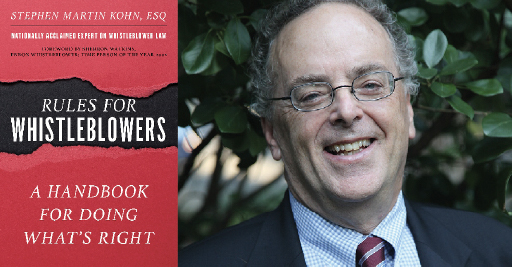
NWC Board Chairman Stephen Kohn, who represented NWC in the case, stated:
The federal obstruction of justice statute encourages employees to report criminal activity and protects whistleblowers from undue retaliation. The CFAA cannot be read so broadly as to allow employers to bring retaliatory lawsuits against federal informants and thereby obstruct justice.
John Kostyack, NWC Executive Director, said:
We hope and expect that the U.S. Supreme Court will respect Congress’s intent to protect whistleblowers from retaliation by their employers when they are assisting federal law enforcement authorities. There is no justification for penalizing those who put their livelihood on the line to assist a federal investigation.
In its brief, NWC urges the Court to reverse the Eleventh Circuit ruling and to not rule so broadly as to undermine whistleblower retaliation protections, following the approach of other circuits that upheld those protections.
For more information, please contact Nick Younger at nick.younger@whistleblowers.org.